
For years, the gold standard of self-service was the "Knowledge Base" (KB). You spent hundreds of hours writing FAQ articles, tagging them with keywords, and meticulously organizing them into folders. Yet, your support tickets haven't decreased, and your customers are still frustrated.
The reality is stark: 84% of customers feel they must exert moderate to high effort to find information in traditional systems. If your "self-service" requires a customer to act like a librarian, it isn't service: it’s homework.
The industry is shifting from static retrieval to Generative Search. This isn't just a tech upgrade; it is a fundamental reimagining of how information is consumed. In this roadmap, we will outline why your traditional KB is obsolete and how to transition to a generative AI powered customer service model that drives real ROI.
Key Takeaways
- Keyword search is dead: Semantic search and Retrieval-Augmented Generation (RAG) provide answers, not just links.
- Effort is the enemy: Generative search reduces customer friction by synthesizing complex data into simple, conversational responses.
- Measurable Impact: Companies moving to generative systems see a 33% lower incident cost per case and significant boosts in CSAT.
- Strategic Shift: Move your team from "article writers" to "knowledge architects" who curate the data that feeds the AI.
Why Your Current Knowledge Base is Failing
Traditional knowledge bases rely on "Keyword Matching." If a customer searches for "reset password" but your article is titled "Credential Recovery," the search engine often fails. This gap forces the customer to abandon the search and open a high-cost support ticket.
The Fragmented Information Problem
Even when keywords match, traditional KBs present a list of links. The customer must then:
- Click through 3-4 different articles.
- Manually synthesize the information.
- Apply it to their specific context.
This "Search Difficulty" is cited by 53% of customers as their biggest frustration with brand websites. When you use an ai chatbot for customer support equipped with generative search, the system does the reading and synthesizing for the customer.

The Architecture of the Future: RAG and Semantic Search
To understand why generative search is superior, you must understand Retrieval-Augmented Generation (RAG).
In a traditional system, the search engine looks for exact text strings. In a RAG-based system, the AI uses Vector Search to understand the meaning behind a query.
How RAG Operates in Practice:
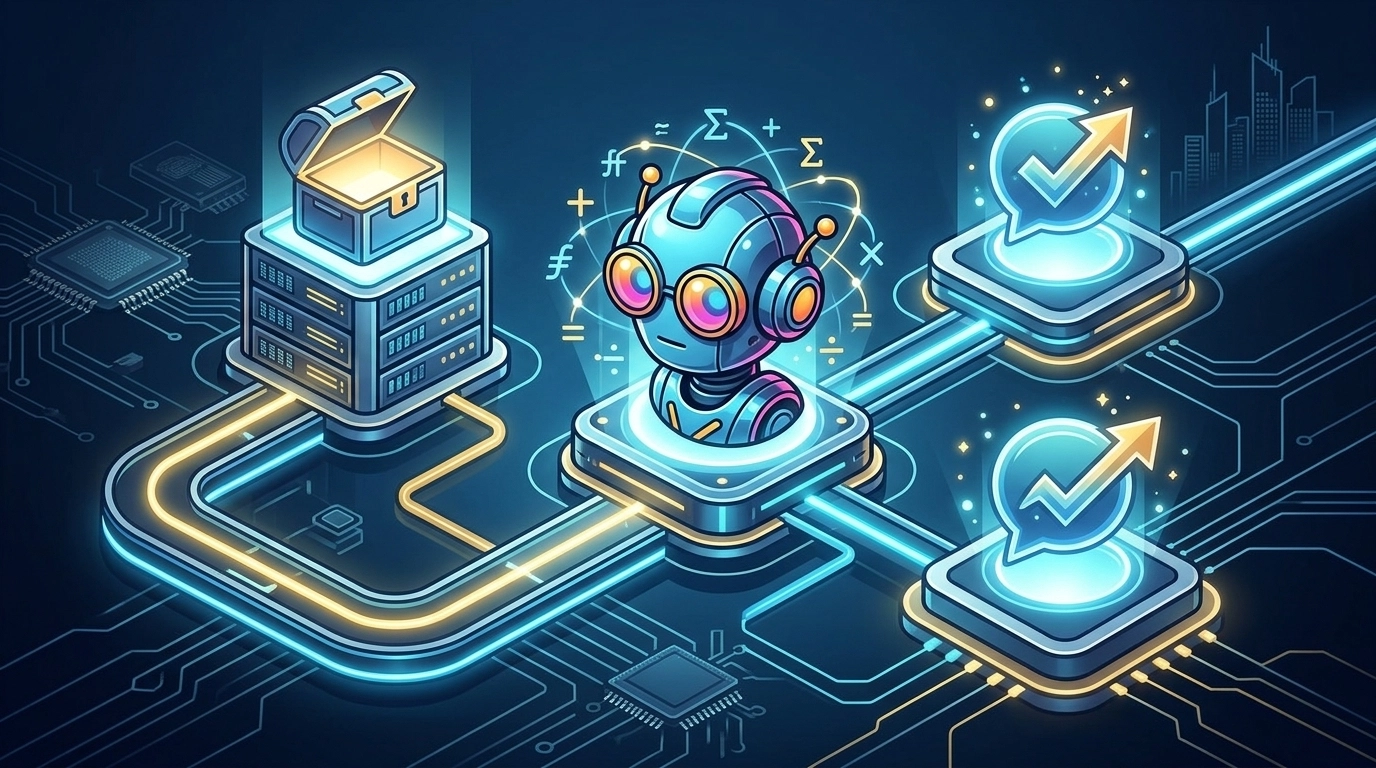
- Step 1: Retrieval. The system scans your entire data ecosystem (KBs, PDFs, past tickets, Slack logs) for chunks of information relevant to the user’s intent.
- Step 2: Augmentation. It provides these relevant chunks to a Large Language Model (LLM) as "grounding context."
- Step 3: Generation. The LLM writes a custom, coherent response that answers the user’s specific question using only the verified data provided.
This ensures the AI doesn't "hallucinate" or make up facts. It stays strictly within the bounds of your brand’s approved information.
Quantifying the Business Impact: ROI, CSAT, and SLAs
Transitioning to generative search isn't just about "cool tech." It is a cold, hard business decision. When you eliminate the friction of search, your metrics move in the right direction.
1. Drastic Reduction in Incident Cost
Traditional helpdesk models rely on "Support Tiers." Tier 1 agents handle the "How do I…?" questions. Generative search effectively eliminates Tier 1. By surfacing accurate answers instantly, you reduce the incident cost per case by an average of 33%.
2. Improved CSAT through "Zero-Touch" Resolution
Customer Satisfaction (CSAT) is directly tied to the speed of resolution. Generative search provides sub-second responses. Unlike human agents, an AI search agent can handle thousands of concurrent queries without a drop in quality or an increase in wait time.
3. Protecting Your SLA
Service Level Agreements (SLAs) are often strained by high ticket volumes. By automating 70-80% of routine inquiries through generative search, you free up your human agents to focus on high-complexity, high-value tasks, ensuring you never miss a response window for your VIP clients.

The 3-Phase Roadmap to Generative Search Integration
Don't try to boil the ocean. Follow this structured phase-based approach to move from a static KB to a dynamic generative engine.
Phase 1: Data Audit and Consolidation (Days 1–30)
Prioritize high-impact cases. Look at your top 20 most frequent support tickets. Ensure the answers to these questions are documented clearly, even if they are currently scattered across emails or internal docs.
- Action: Scrap redundant or outdated FAQ articles.
- Goal: Create a "Clean Data Source" that the AI can trust.
Phase 2: Implementation of the Semantic Layer (Days 31–60)
Integrate a platform like Reply Botz that supports RAG. Connect your clean data sources to the AI engine.
- Action: Set up "Grounding Rules" to ensure the AI only answers based on your documents.
- Goal: A functional internal beta that can accurately answer complex, multi-part questions.
Phase 3: Conversational Deployment and Feedback Loops (Days 61–90)
Deploy the generative search interface to your customers.
- Action: Monitor "Thumbs Up/Down" feedback on AI responses.
- Goal: Achieve a 70% deflection rate where customers find their answer without needing a human.
Risk Management: Busting the "Hallucination" Myth
A common fear among CEOs is that AI will "go rogue" and give bad advice or offer unauthorized discounts.
Risk Mitigation Strategy:
- Strict Temperature Settings: Keep the "creativity" of the AI low. In customer support, you don't want a poet; you want a technician.
- RAG Constraints: Ensure your system is configured to say "I don't know" if the answer isn't in the provided documentation.
- Human-in-the-Loop: For high-stakes industries (medical, legal, finance), use generative search to draft responses for human agents to review, rather than sending them directly to customers.
Implementation Checklist for Small Business Owners
Use this checklist to evaluate if you are ready for the shift:
- Inventory check: Do you have at least 50 documented procedures or FAQs?
- Identify "Dead Ends": Which pages on your site have the highest "Bounce Rate" after a search?
- Define "Handoff" Protocols: If the generative search can't answer, do you have a seamless handoff to a human?
- Metric Baseline: Do you know your current "Cost Per Ticket"? You need this to measure ROI later.
- Voice Audit: Is your documentation written in a way that an AI (and a human) can easily parse? Use bullet points and clear headers.
FAQ: Transitioning to Generative Search
Q: Do I need to delete my existing knowledge base?
No. Your KB becomes the "fuel" for the generative AI. You stop worrying about how the user finds the article and start focusing on making sure the content inside the article is accurate.
Q: Is generative search expensive to implement?
While initial setup requires more strategic thought than a basic FAQ plugin, the long-term ROI of reducing staff workload by 70% far outweighs the subscription costs.
Q: How does this help with marketing and sales?
Generative search isn't just for support. It can be used as an automated marketing tool to answer pre-sales questions, recommend products based on user needs, and capture leads while your team sleeps.
Conclusion: Stop Searching, Start Answering
The era of the "Search Bar" is ending. The era of the "Answer Engine" is here. If you continue to force your customers to hunt through static pages of text, you are essentially asking them to do your work for you.
Start small. Take your most visited FAQ page and feed it into a Reply Botz AI agent. Watch how the conversation shifts from "I can't find this" to "Thanks for the help."
In the modern economy, speed isn't just an advantage: it is a requirement. Move to generative search today, or risk being left behind by a competitor who did.

Editor’s Note: This piece was developed using AI-assisted research and drafting to ensure data precision and speed. It has been reviewed, edited, and fact-checked by Wolf Bishop to ensure it meets our standards for strategic depth and lived experience.