
The regulatory landscape for artificial intelligence shifted from "theoretical" to "strictly enforceable" in 2026. If you are operating an ai chatbot for customer support or an ai powered customer service platform, you are no longer in the "Wild West" of tech. Between the full implementation of the EU AI Act and a patchwork of aggressive US state laws like California’s SB 942, the era of unregulated AI is officially over.
For small and medium-sized businesses (SMBs), "I didn't know" is no longer a viable legal defense. This article provides a strategic roadmap to ensure your automation remains a revenue driver, not a liability.
Key Takeaways: The 2026 Compliance Snapshot
- August 2, 2026, Deadline: This is the "D-Day" for the EU AI Act. All transparency and governance requirements become fully enforceable.
- Mandatory Disclosure: Under California's SB 942 and EU regulations, you must inform users they are speaking with a bot.
- Massive Fines: Non-compliance can cost up to €35 million or 7% of global revenue in Europe, or $20,000 per violation in states like Colorado.
- Risk Categorization: Customer support bots are generally "Limited Risk," but context (e.g., healthcare or finance) can push them into "High Risk" categories.
- The Bottom Line: Compliance isn't just about avoiding fines; it’s about maintaining the CSAT (Customer Satisfaction) and trust necessary to scale.
Phase 1: Understanding the 2026 Regulatory Framework
To navigate 2026, you must understand the two primary pillars of AI law: the EU AI Act and the escalating US State Regulations.
1. The EU AI Act: The Global Gold Standard
As of August 2, 2026, the EU AI Act is the most comprehensive regulation on the planet. Even if your business is based in the US, if you serve customers in the European Union, these laws apply to you.
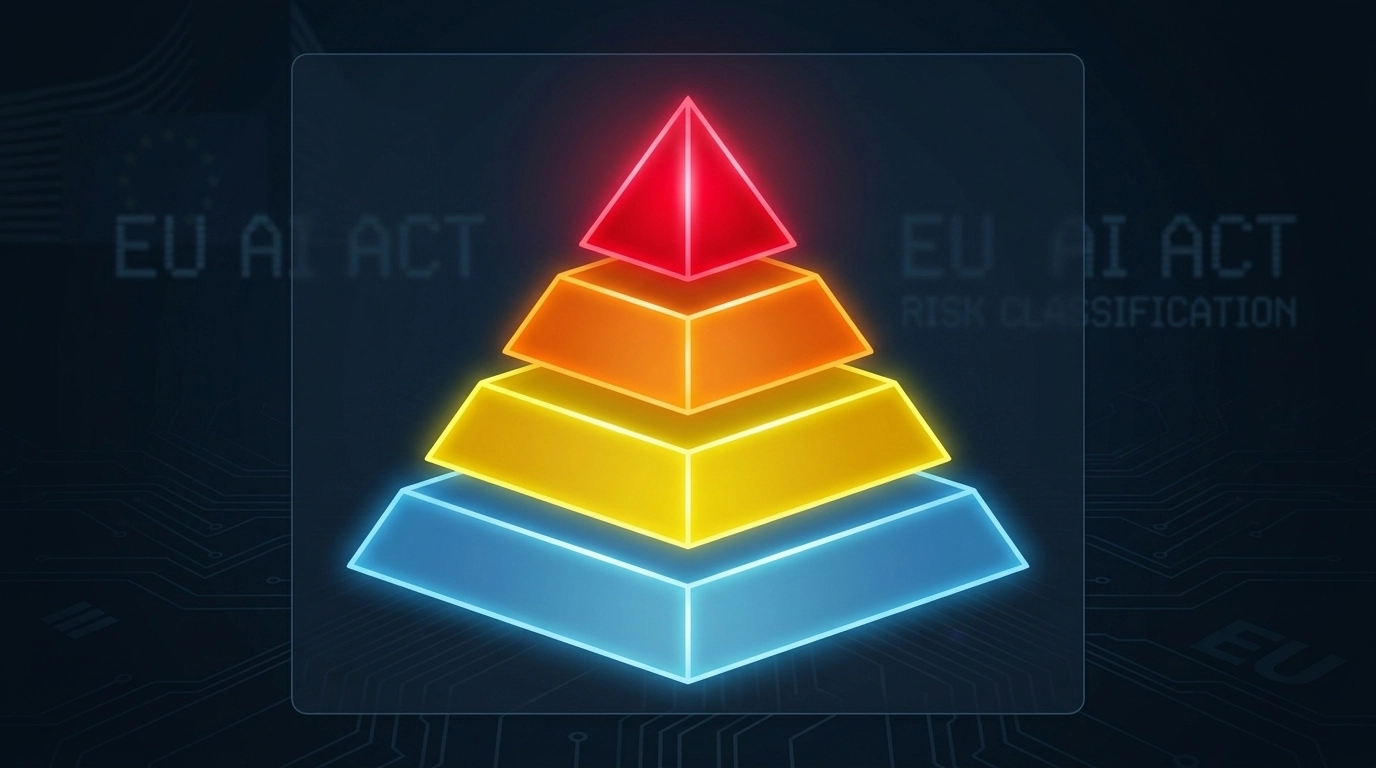
The Act uses a "Risk-Based Approach." Most ai chatbot for customer support systems fall under Limited Risk. This means you don't face the same heavy burdens as "High Risk" systems (like those used in police surveillance), but you have strict Transparency Obligations. You must ensure that users are aware they are interacting with an AI system unless it is obvious from the context.
2. US State Laws: California and Colorado Lead the Way
The US has not yet passed a federal AI law, but states have filled the vacuum:
- California SB 942 (AI Transparency Act): Effective August 2, 2026, this law requires AI providers to disclose when content is AI-generated. This includes text-based chat responses.
- Colorado SB 24-205: Taking effect June 30, 2026, this law requires developers and deployers of "high-risk" AI to implement a risk management framework and notify consumers if an AI makes a significant decision about them.
Phase 2: The Transparency Mandate , "Bot Disclosure"
The most immediate legal requirement for any SMB using an ai powered customer service tool is disclosure. In 2026, "stealth bots" that try to pass as humans are not just unethical, they are illegal in many jurisdictions.
How to Comply with Disclosure Requirements:
- Use Clear Identifiers: Your bot should introduce itself as a digital assistant. For example: "Hi, I'm the Reply Botz digital assistant. How can I help you today?"
- Visual Cues: Use avatars or icons that clearly represent a bot rather than a human photo. Our vibrant-blue-chatbot-mascot is a perfect example of staying "on-brand" while being legally compliant.
- The "Human Handoff" Option: Under many new consumer protection laws, users have a right to request a human. Systems like the Reply Botz AI + Human Helpdesk ensure you stay compliant by providing a seamless handoff when the AI reaches its limit.
Pro-Tip: Transparency actually improves trust. We’ve written extensively on why being honest about AI makes your customers trust you more.
Phase 3: Risk Assessment and Data Governance
Is your bot "High Risk"? In 2026, the definition depends on the Impact Area.
High-Risk Categories Include:
- Healthcare Advice: If your bot gives medical guidance (California AB 489).
- Financial Services: If the bot determines creditworthiness or processes loan applications.
- Employment: If the bot screens resumes or handles HR grievances.
If your chatbot falls into these categories, you must maintain detailed documentation, implement human oversight (HITL – Human In The Loop), and perform regular risk audits. Even for standard e-commerce bots, you must ensure GDPR and CCPA compliance regarding the data the bot collects.
The Strategic Roadmap: A 90-Day Compliance Plan
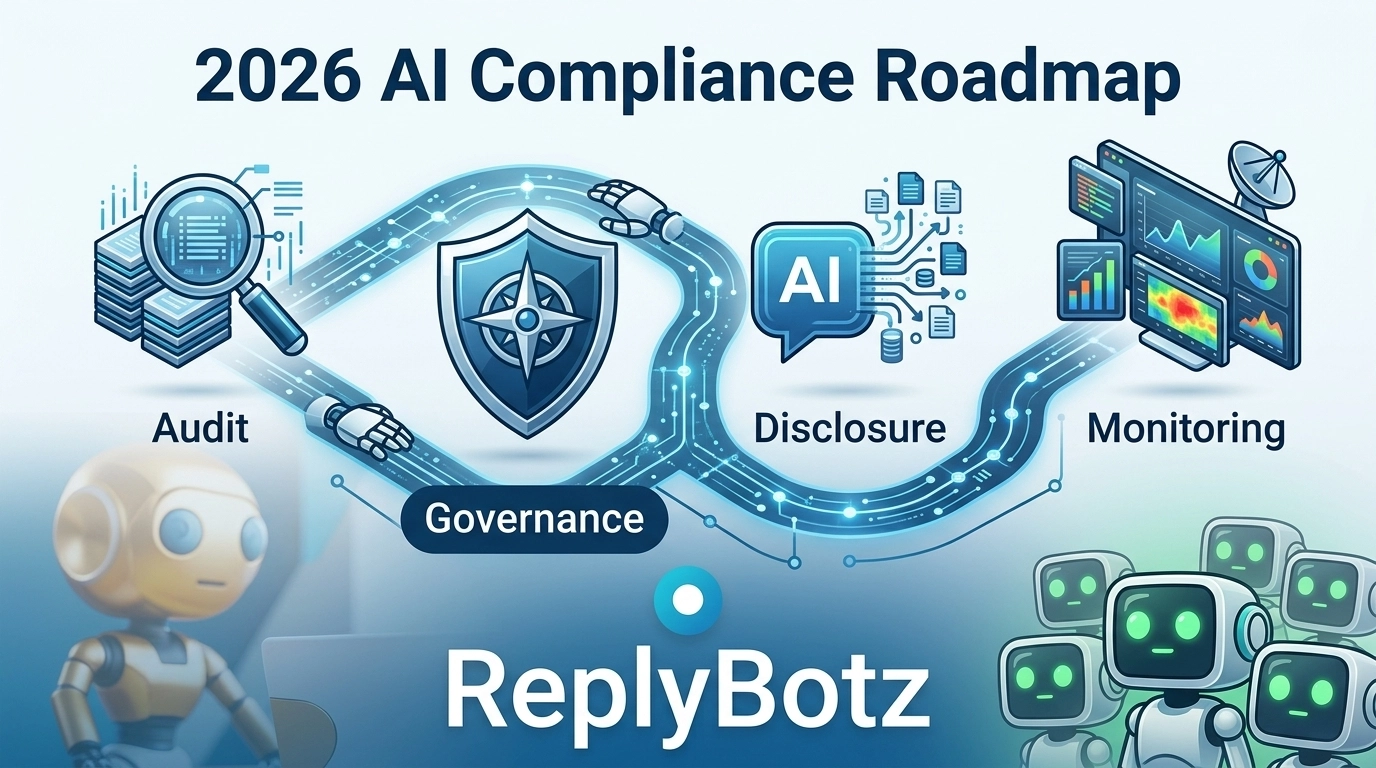
Don't wait for a "Cease and Desist" letter. Follow this 3-step roadmap to audit and secure your AI infrastructure.
Phase 1: The Audit (Days 1-30)
- Inventory your AI: List every point where AI interacts with a customer.
- Classify Risk: Determine if any bot usage falls into "High Risk" categories under Colorado or EU law.
- Check Data Sources: Ensure your NLU (Natural Language Understanding) models are not being trained on sensitive PII (Personally Identifiable Information) without consent.
Phase 2: Implementation (Days 31-60)
- Update Disclosures: Add "AI-generated content" watermarks or clear text disclosures to your chat windows.
- Establish SLA for Handoffs: Ensure your hybrid AI-human system meets the legal standard for "accessible human intervention."
- Review Training Data: Verify that your AI isn't producing biased or discriminatory outputs, which is a major focus for 2026 regulators.
Phase 3: Monitoring & Governance (Days 61-90)
- Appoint an AI Lead: Even in an SMB, someone must be responsible for monitoring regulatory changes.
- Log Everything: Keep logs of AI-customer interactions for at least six months to satisfy EU and state-level audit requirements.
Common Pitfalls and Risk Management
Pitfall 1: Relying on Your Vendor's Compliance
Many SMBs assume that because they use a third-party AI, the vendor is responsible for compliance. This is a myth. Under the EU AI Act and California law, the deployer (you) is often held liable for how the AI is used in a specific business context.
Pitfall 2: Hallucinations as Liability
In 2026, "the AI lied" is not a defense. If your bot promises a refund or a price that contradicts your terms of service, you may be legally bound to honor it. Limit the bot's creative freedom using RAG (Retrieval-Augmented Generation) to ground its answers only in your approved documentation.
Pitfall 3: Ignoring "Right to Opt-Out"
Several 2026 US laws give consumers the right to opt-out of "automated decision-making." Ensure your chat interface has a clear path for users to bypass the bot.
Implementation Checklist for SMB Owners
Use this checklist to verify your current ai chatbot for customer support status:
- Transparency: Does the bot identify itself as AI within the first two messages?
- Human Handoff: Can a user reach a human within a reasonable SLA?
- Data Privacy: Is the bot collecting only the data it needs to function?
- Risk Classification: Have you documented why your bot is "Limited Risk"?
- Vendor Review: Have you reviewed your AI provider’s 2026 compliance certifications?
FAQ: Navigating 2026 AI Laws
Q: Can I be sued for my chatbot's mistakes?
A: Yes. Under California AB 316, developers and users cannot avoid liability by claiming the AI acted autonomously. You are responsible for the output of your AI systems.
Q: Does the EU AI Act apply to me if I’m in New York?
A: If your website is accessible to and used by individuals in the EU to purchase goods or services, yes, you must comply with the EU AI Act’s transparency requirements.
Q: What is the penalty for not disclosing a bot?
A: Under Colorado's SB 24-205, penalties can reach $20,000 per violation. Each customer who interacts with a non-disclosed bot could potentially count as a separate violation.
Conclusion: Compliance is a Competitive Advantage
In the fast-moving world of 2026, compliance isn't just a legal chore: it's a differentiator. Customers are increasingly wary of "black box" algorithms. By being transparent and using a system that prioritizes both AI efficiency and human empathy, you build a brand that lasts.
If you’re worried about whether your current setup meets these 2026 standards, it's time to switch to a platform built with these regulations in mind. At Reply Botz, we help you automate without the legal headache.

Ready to audit your support system? Start by exploring our AI + Human Helpdesk solutions today.
Editor’s Note: This piece was developed using AI-assisted research and drafting to ensure data precision and speed. It has been reviewed, edited, and fact-checked by Wolf Bishop to ensure it meets our standards for strategic depth and lived experience.